Venezuelan food to share often begins with a simple question: “Should we get something for everyone?” Nobody has taken a bite, yet the conversation is already underway. Someone wants cheese; another person suggests trying something unfamiliar. Plates move aside to make room. That small negotiation is part of the pleasure: paying attention to one another while deciding what the table will enjoy.
With Thanksgiving approaching and December gatherings on the horizon, this is a good moment to make room for an ordinary meal with friends. It might be a family lunch, a reunion with your panas, or an introduction to Venezuelan flavors for someone new. What makes the meal memorable is the combination of food and the particular people discovering it together.
Venezuelan Food to Share Starts with Listening
Ordering for the table asks us to look beyond our individual cravings. We check what others enjoy, what they avoid, and whether a dish makes them curious. Remembering that someone loves cheese or offering a newcomer the first taste are modest gestures, but they communicate something specific: your enjoyment matters here, and we have made room for it.
Sharing works best when everyone chooses it freely. An appetizer can belong to the group while the main courses remain individual. Someone may offer a taste without wanting to exchange half a meal. Respecting a person’s preference for a separate plate is part of generosity, too. A welcoming table never requires guests to defend how they want to eat.
There is also a useful distinction between eating together and eating from a shared dish. The second involves an extra layer of coordination. We pass a platter, notice what remains, adjust our serving, and ask whether someone has tried it. For a moment, the food becomes a small collective responsibility rather than a series of entirely separate decisions.
What a Shared Plate Changes
Researchers Kaitlin Woolley and Ayelet Fishbach examined that distinction in a study published in Psychological Science in 2019. Across their experiments, eating from shared plates encouraged subsequent cooperation compared with eating the same food from separate plates. The researchers connected the effect to perceived coordination, and their findings included interactions between people who did not already know each other.
That does not mean an appetizer can resolve a family disagreement or that sharing is always preferable. The finding offers a more modest insight: how food is served can influence how people interact. Around an everyday table, coordination may look as simple as noticing an untouched place setting and asking, “Did you get some before we finish this?”
A common dish also gives everyone something immediate to discuss. One guest finds a flavor sweeter than expected; another recognizes an ingredient and remembers where they first tasted it. Nobody needs specialized vocabulary to join in. The food provides a reference point that is visible, tangible, and available to people whose backgrounds may otherwise be very different.
Venezuelan Food to Share Makes Contrasts Easier to Notice
Consider a cachapa with cheese. The sweetness of the corn meets the saltiness of the dairy, and the experience changes when the two arrive together in one bite. For someone encountering that pairing for the first time, it can illuminate a recurring pleasure in Venezuelan cooking: sweet and savory flavors enjoyed alongside each other rather than kept strictly apart.
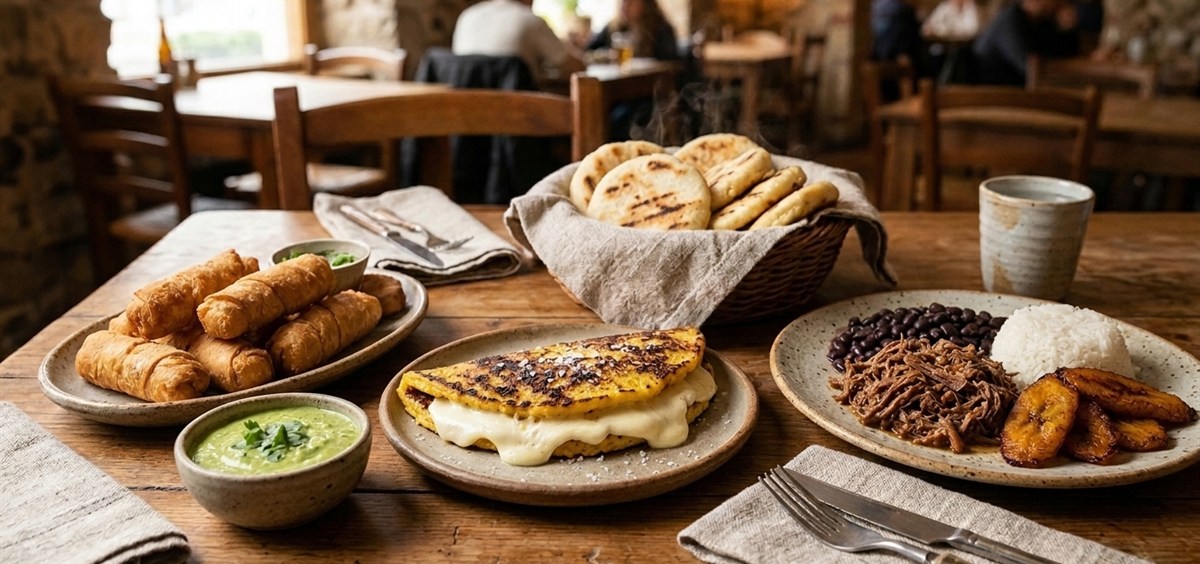
A pabellón offers another opportunity to compare. Its rice, black beans, shredded beef, and tajadas, or ripe sweet plantains, contribute different textures and flavors. A forkful with more beans feels different from one that includes a piece of plantain. There is no need to prescribe a perfect bite; noticing those differences makes the meal more interesting.
Variety becomes meaningful when the differences are recognizable. A crisp exterior, a tender corn base, and a juicy filling give the group separate reasons to pause. Several dishes that all offer the same sensation may be less revealing than a smaller selection with distinct textures. The pleasure comes from discovering what each person responds to, not simply accumulating more food.
Venezuelan appetizers make that exploration possible in small portions, as we discuss in our article on the pleasure of grazing. But discovery does not have to stop when the appetizers disappear. Comparing fillings, offering a taste, or explaining why a combination surprises you can keep a shared meal interesting without turning the table into a formal tasting session.
“Try This” Can Carry a Personal Story
When someone introduces food from their home country, they may also be sharing a piece of their biography. “My dad always ordered this” provides a different kind of information from a menu description. It helps another person understand why a familiar dish has emotional weight. The food remains the same, but the relationship around it becomes more visible.
Those stories deserve room for differences. Two Venezuelans can remember the same preparation in entirely different settings, while someone raised elsewhere may approach it without nostalgia. Curiosity is as welcome as recognition. A good conversation allows people to ask questions and develop their own preferences rather than treating every response as a test of cultural understanding.
The invitation works best when it stays open. Describe the main ingredients, explain what you enjoy, and let the other person decide. They may love a different component or prefer another filling. That difference gives you something else to discover together. Introducing Venezuelan food should expand someone’s experience, not require them to reproduce your childhood memories exactly.
Over time, small preferences become familiar. You learn who saves the tajadas for last, who wants sauce on the side, and who always asks for another taste of the cheese. Remembering those details makes the next meal feel personal before anyone orders. Familiarity grows through attention and repetition, sometimes beginning with a single lunch that nobody expected to become a tradition.
Sharing Includes Making Everyone Comfortable
A communal plate is only enjoyable when guests understand what is being offered. Clear ingredient descriptions matter, especially when someone avoids a food or needs to ask about it. Guessing is less welcoming than checking. A separate order may be the most comfortable choice for that person, and it should feel like a normal part of the gathering.
The same consideration applies to pace and appetite. People arrive with different needs, and nobody should feel rushed to take a serving or pressured to finish. Asking before ordering more keeps the group involved. These practical details are easy to overlook, yet they help turn the idea of generosity into an experience that actually feels generous.
A Restaurant Table Can Become Your Meeting Place
Eating out can give everyone a chance to participate, including the person who usually cooks, serves, or checks whether something needs reheating. That change in responsibility can be part of the pleasure. As with the Sunday table explored elsewhere on our blog, the meal offers a defined place and time to enjoy being together.
The occasion can be small: a conversation you have postponed, a friend’s good news, or a Tuesday when everyone is finally available. Start with that simple question about ordering something together, then let the meal take its own shape. Come to Panna with family or friends and enjoy Venezuelan food to share, with room for favorite flavors, new discoveries, and the people who make both worth remembering.