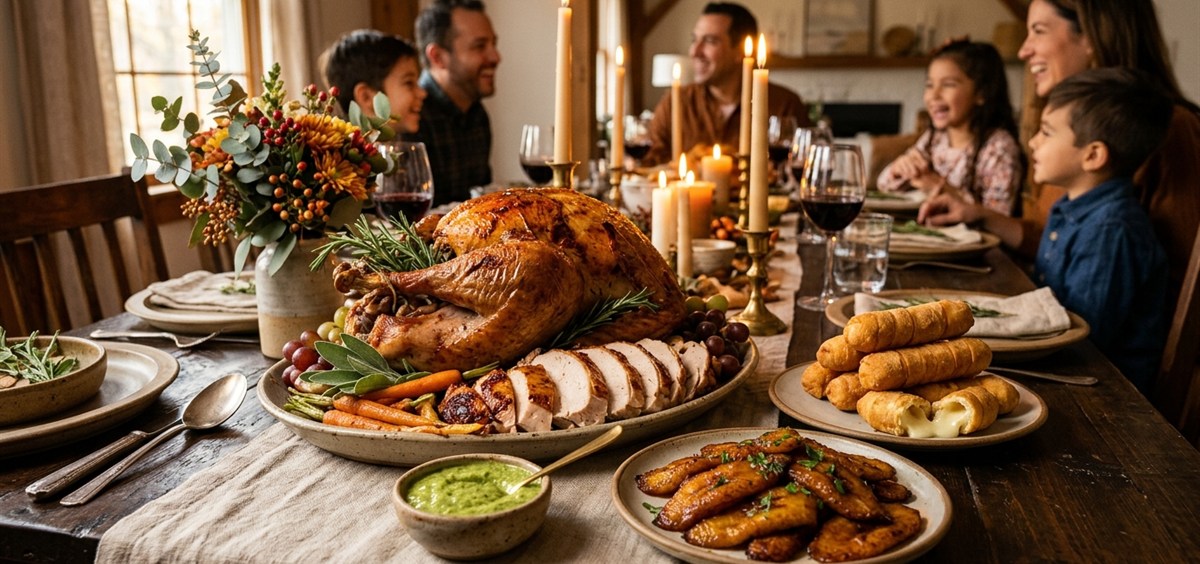
A Venezuelan Thanksgiving sometimes begins with an invitation from a neighbor, a coworker, or a partner’s family. You know that Thursday matters to the people welcoming you, and that food will be part of the gathering. What you may not know yet is how this particular household celebrates, what guests usually contribute, or where your own traditions might fit.
In 2026, Thanksgiving falls on November 26. With a week to go, there is time to look beyond the familiar image of a turkey at the center of the table. Understanding the holiday’s history and listening to the people who celebrate it can make participation more meaningful. It also raises a personal question: how do we welcome something new while keeping what already matters?
A Venezuelan Thanksgiving Begins with Understanding
A tradition becomes easier to enter when we learn what it means to our hosts. One family might say a prayer; another might discuss the year; another may simply value getting everyone into the same room. Asking is more useful than assuming. A single date on the calendar can contain many different family experiences, including those of people who do not celebrate it.
Think of welcoming a guest to a Venezuelan Christmas gathering. They may recognize a hallaca and still not know why your family waits for someone before eating or follows a particular order during the evening. Participation involves those smaller details. The Thanksgiving table offers a similar opportunity to listen before comparing and to discover before explaining our own customs.
That approach keeps cultural exchange from becoming a contest. There is no need to decide which tradition feels warmer or which food is more authentic. You can enjoy an unfamiliar side dish, ask how it became a favorite, and later mention something it reminds you of. Both experiences become more interesting when neither has to replace the other.
The History Deserves More Than a Simple Story
The 1621 harvest gathering at Plymouth, attended by English colonists and Wampanoag people, holds a prominent place in popular accounts of Thanksgiving. But presenting it as the beginning of an uncomplicated, lasting friendship leaves out Indigenous perspectives and later conflict. Educational materials from the National Museum of the American Indian encourage readers to examine that simplified narrative more carefully.
The modern national holiday took shape much later. The National Archives documents Abraham Lincoln’s 1863 proclamation and the 1941 legislation establishing the fourth Thursday in November as the federal holiday. The seventeenth century gathering and the date Americans now plan around are therefore not one continuous event. Political decisions and changing practices separate them across several centuries.
Knowing this history does not prevent a family from expressing gratitude. It allows that expression to coexist with respect for people who associate the holiday with loss or mourning. A considerate celebration can acknowledge that different people understand the date differently. Asking questions adds depth to a gathering without requiring every guest to share the same interpretation of its past.
Venezuelan Thanksgiving Can Add Without Replacing
For a Venezuelan family living in the United States, November and December may gradually acquire different meanings. Thanksgiving might bring together colleagues and neighbors, while Christmas Eve remains connected to other relatives and foods. Observing both does not require turning them into the same celebration. Each can provide its own reason to gather and its own place in family life.
Adoption need not follow a fixed sequence. One year you may attend as a guest; another year you might bring something; eventually, perhaps, you will host. Or you may never make the holiday a major family occasion. These choices are personal. They do not measure attachment to Venezuela, gratitude toward a new home, or the strength of anyone’s cultural identity.
Our article about the meeting of hallacas and turkey explores the culinary side of this encounter. Here, the important distinction is that a tradition may become meaningful through people before it becomes meaningful through dishes. You might remember your first Thanksgiving because someone made room for you, explained an unfamiliar custom kindly, or stayed talking long after dinner ended.
Bringing Something to an Unfamiliar Table
If your host invites you to contribute, start by asking what would be useful. They may welcome a side dish or dessert, or they may already have the meal organized. Venezuelan food can be a lovely introduction when it fits that conversation. Bringing a cherished preparation is most generous when it supports the gathering rather than unexpectedly reorganizing it.
Explaining the food does not require a speech on national identity. Its name, main ingredients, and a truthful personal connection usually provide enough context. Perhaps a sweet and savory combination feels familiar to you, or the dish appears at your family’s celebrations. You can share that experience without claiming it represents every region, household, or generation in Venezuela.
Clarity matters as much as enthusiasm. If someone asks about meat, dairy, or another ingredient they avoid, give an accurate answer rather than encouragement to “just try a little.” When you do not know, say so and check. Hospitality includes the freedom to decline. A guest should not have to choose between protecting a personal boundary and appearing appreciative.
Being a guest also means allowing the hosts to tell their stories. Ask who introduced a favorite dish or why a particular serving bowl returns every year. Those details reveal how traditions are maintained through ordinary objects and repeated choices. You may find that a seemingly unfamiliar celebration contains a recognizable impulse: keeping certain people and moments present through food.
Gratitude Becomes Clearer When It Is Specific
Summarizing an entire year can make gratitude sound abstract. A particular scene brings it closer: the person who helped with an appointment, checked in after an interview, or saved you a seat when you barely knew anyone. Naming that action recognizes the time and attention behind it. The thank you becomes something another person can understand and remember.
A meal creates an opportunity to say what you have postponed. It does not need to include a formal round of speeches. A quiet conversation can hold the same meaning, especially for someone uncomfortable speaking before a group. Even if you do not observe Thanksgiving at home, the date can prompt a lunch with someone whose kindness deserves acknowledgment.
There should also be room for difficult years. Not everyone arrives in November with good news, and nobody owes the table a complete story of happiness. Appreciating someone’s company can coexist with missing a relative or facing uncertainty. A welcoming gathering allows people to participate from where they are, without turning dinner into a mandatory statement about how well life is going.
A Tradition Grows When We Want to Meet Again
As our discussion of Christmas in the diaspora suggests, customs travel with people and change as their lives change. Thanksgiving can become part of that process. Its value is not secured by reproducing a menu perfectly; it develops when the people involved find a reason to return, whether that is conversation, companionship, or the feeling of being included.
Before the holiday arrives, think about someone you would enjoy thanking over a meal. A small table is enough to share familiar flavors and learn something new about each other. Come to Panna with the people who have helped you feel welcome, enjoy Venezuelan food, and give that conversation some time. A new tradition might begin simply with deciding to meet again.