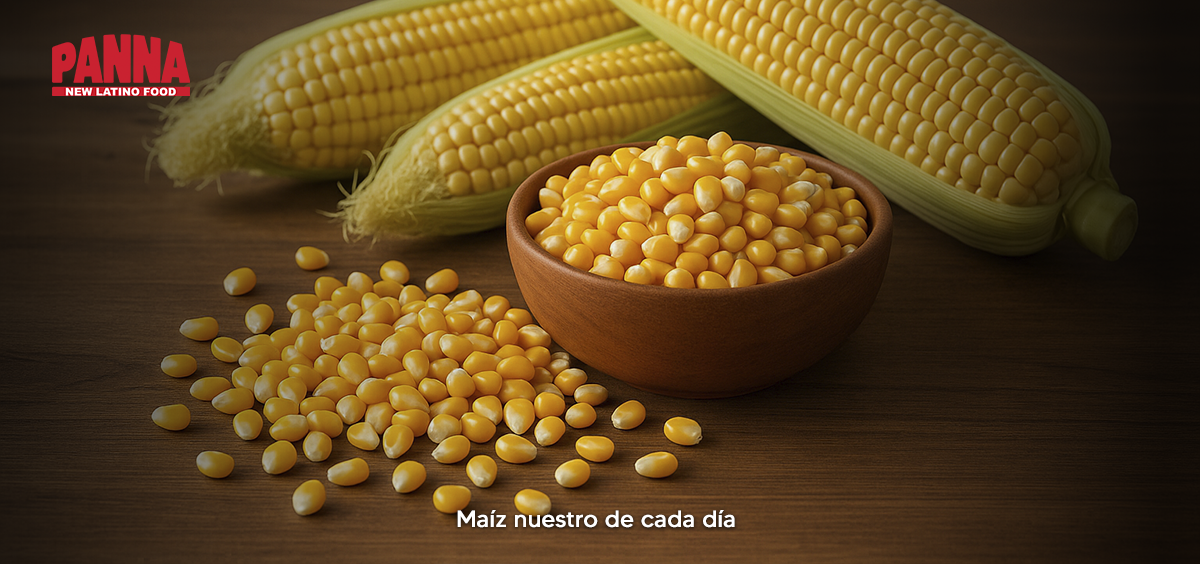
There are ingredients that are not just eaten: they are inherited, defended, and carried in the blood. In Venezuela, corn is one of them. We may emigrate, adapt, and explore new cuisines, but it only takes one bite of an arepa, a corn fritter, or a hearty soup (hervido) with tender corn on the cob (jojoto) for the body to remember where it comes from.
Because in our culture, corn is not just another cereal: it is the backbone of Latin American—and especially Venezuelan—culinary identity. Today, September 29th, on World Corn Day, we celebrate its history, its versatility, and its symbolic weight. Corn is not just a nutritional base; it is affection, territory, memory, and, above all, continuity.
A SEED BORN FROM THE EARTH AND RESISTANCE
The origin of corn is intimately linked to the indigenous peoples of the Americas. For more than 7,000 years, native communities cultivated, domesticated, and transformed it into the sacred food that marked the continent.
In Venezuela, corn was already being cultivated long before the arrival of colonizers. It was an essential part of the diet of the Carib, Arawak, Timoto-Cuica, and other original groups, who cooked it in various ways: boiled, fermented, ground, or roasted. It was not just food; it was also a symbol of fertility, abundance, and the life cycle. A plant that gave exactly what was needed at the right time: tender jojoto in early harvest, hard grain for storage, leaves for wrapping, and the cob (tusa) to light the stove. Corn was part of a cosmology, and even today, without realizing it, we continue to honor that cycle in every dish that includes it.
NOT ONE, BUT MANY CORNS
When we think of corn, we usually imagine sweet yellow kernels. But in reality, there are dozens of native varieties: white, red, black, speckled, blue, hard, dented, waxy, and floury. Each has a different use, name, and meaning depending on the region.
- In the Venezuelan Andes, varieties are grown to make chicha andina and mazamorra.
- In the Plains (Llanos), it is used for bollos and atoles.
- In the East, for majarete, gofio, or funche.
- And in the rest of the country, for making arepas, cachapas, and hallacas.
Every community has found in corn a way to tell its story through the kitchen. Furthermore, the preparation methods are infinite:
- Boiled as jojoto for soups and salads.
- Fermented for ancestral drinks.
- Toasted to make fororo.
- Converted into flour for a more portable kitchen, like the one we use daily. In every version, there is a different Venezuela, but always present.
CORN AND VENEZUELAN IDENTITY: THE AREPA AS A SYMBOL
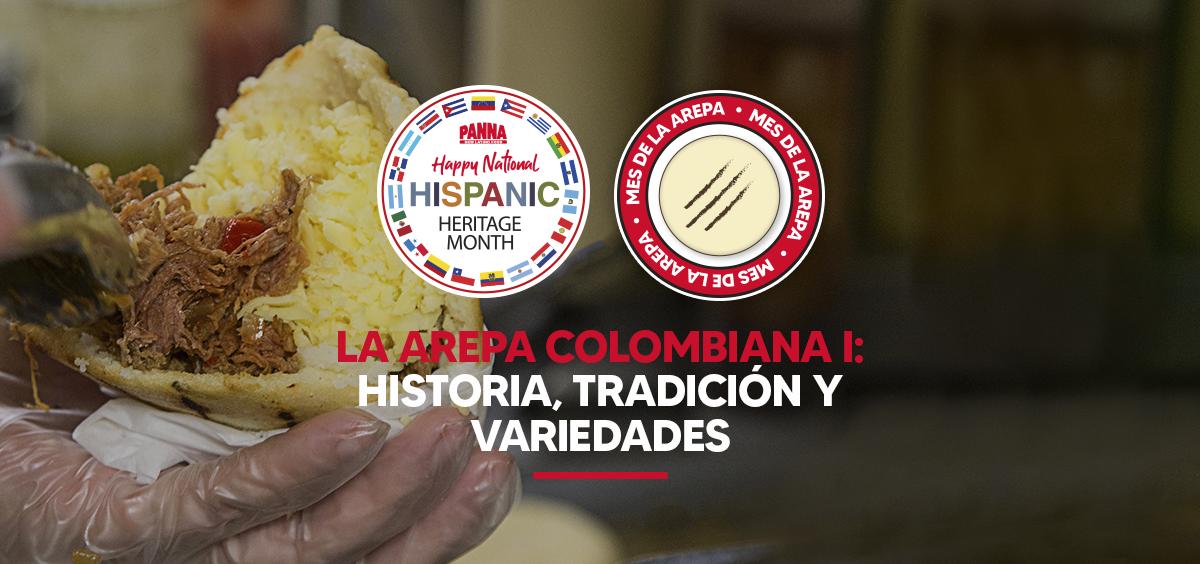
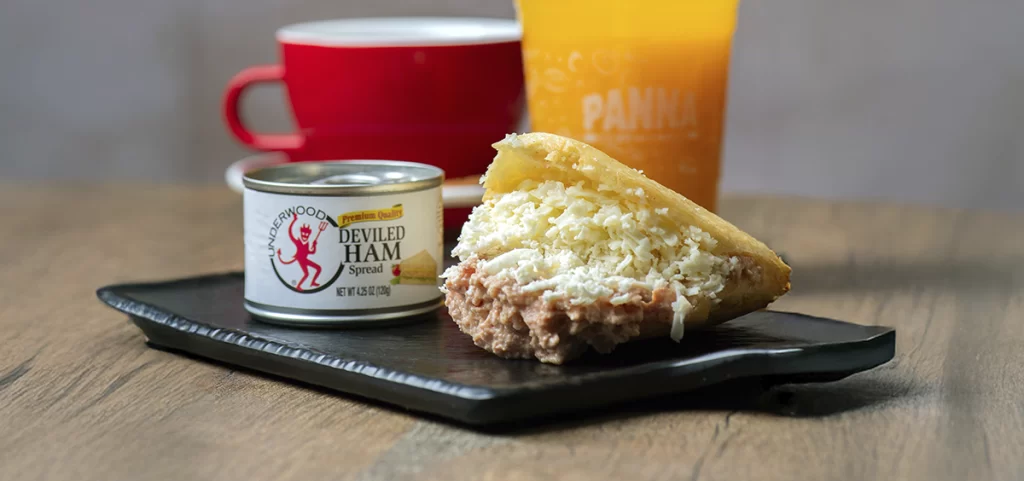
You cannot talk about corn in Venezuela without talking about the arepa. Round, versatile, generous, and ancestral. The arepa is probably the most democratic bread we have: it is eaten across all social classes, throughout the country, at any time of day. It is filled with whatever is available: reina pepiada, white cheese, perico, meat, beans, stew, or avocado.
Amidst such diversity, the base is always the same: pre-cooked corn dough. A dough that can be made at home or with industrial flour, but which preserves the original spirit of what is simple, nutritious, and shared. The arepa doesn’t ask for silverware or protocol. It asks for time, conversation, and a napkin nearby. That, too, is part of its magic.
CORN AS A FAMILY RITUAL
Long before pre-cooked flour existed, corn was soaked, parboiled (pilado), and ground by hand. It was a long, collective process, often led by women. It was pounded in wooden troughs (bateas), ground on stones or hand-cranked mills, and from there came the base dough for all preparations.
That work was not just culinary: it was an act of community and the transmission of knowledge. The grandmother taught the daughter, who would then teach the granddaughter. As it was ground, people talked, remembered, and taught. Even with the industrialization of cornmeal, many families still speak of the time when “we ground the corn ourselves at home” as a mark of origin. When an arepa tastes “just like the old days,” it’s because, at some point, it touches that origin again.
IN THE DIASPORA, CORN IS MEMORY
For Venezuelans living abroad, finding cornmeal is one of the most important rituals. Not out of necessity, but out of longing. Having a package of P.A.N., Juana, or Doñarepa in the pantry is like having an emotional safe-conduct. It is knowing you can make an arepa at any time and feel at home, even if you are thousands of miles away. And when it’s not available, we improvise: dry corn is bought at Latin markets, ground, mixed, and started over. Because corn doesn’t just nourish: it also comforts.
AT PANNA, CORN IS THE HEART
At PANNA, corn is not just an ingredient. It is a foundation. It is a promise. It is what connects us to the most authentic parts of our roots. That is why every day we cook with corn with the respect it deserves. From the fresh dough of our cachapas to our breakfast arepas—always soft on the inside and crispy on the outside. Because at PANNA, we know that authentic flavor is built with ingredients that matter. And none is more “ours” than corn.
CORN: HERITAGE, FLAVOR, AND FUTURE
Today, on its world day, corn needs no grand speeches; a well-made dish, a shared table, and a returning memory are enough. From an arepa with perico to a soup with tender jojoto. From a cachapa with cheese to a corn-dough pastry. Corn is everywhere and sustains us, even if we don’t notice it.
Celebrating it is not just about fields and harvests; it is also about recognizing it in the city, in migration, in the lunchbox, in the late-night craving, and on the everyday menu. At PANNA, we celebrate it every day, because if there is one thing we know how to do, it is cooking with soul… and corn, our corn, is the first soul that enters our kitchen.