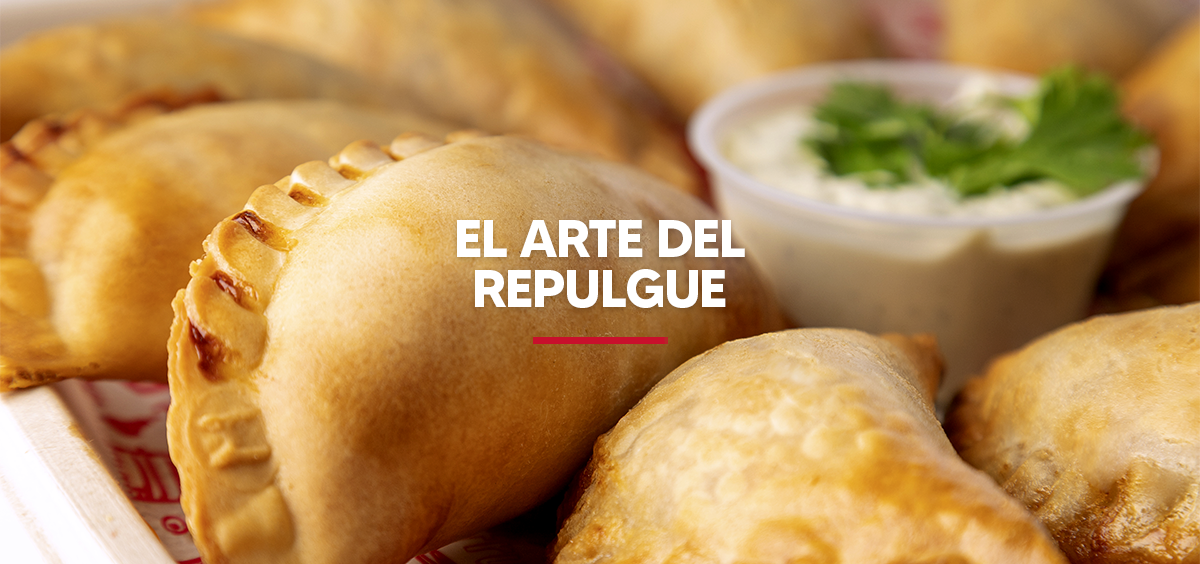
The Art of the Repulgue: Today, we are going to dive into the fascinating world of Argentine empanadas—those delicious stuffed pastries that conquer us with every bite. But this time, we’ll focus on a detail that, although small, is fundamental: the repulgue.
That sealing technique not only keeps the filling in place but also gives identity and character to every empanada. So, get ready to discover the secrets behind every fold and how we at PANNA honor this tradition with our very own empanadas.
THE ART OF THE REPULGUE: MUCH MORE THAN A SIMPLE SEAL
The repulgue is the method used to close and seal empanadas by forming a series of folds along the edge of the dough. Beyond its practical function of keeping the filling inside during cooking, the repulgue is an expression of creativity and tradition. Each design can indicate the type of filling and, in many cases, reflects the region or even the family origin of the empanada.
ORIGINS OF THE REPULGUE: FROM ENGLISH MINES TO ARGENTINE KITCHENS
Although the repulgue is a technique widely associated with Argentine empanadas, its roots reach across various cultures. For example, in England during the 17th and 18th centuries, Cornish miners took “Cornish pasties” to work. These featured a thick repulgue that served as a handle. This way, they could hold them with dirty hands and then discard that part, avoiding the ingestion of toxic substances like arsenic. This ingenious method guaranteed a safe meal in precarious working conditions.
A VARIETY OF REPULGUES: A REGIONAL AND FAMILY TRADITION
In Argentina, the repulgue is a true work of art that varies by region and filling type. While there is no universal rule, some traditions suggest a specific number of folds. For instance, in Tucumán, it is believed that the perfect empanada should have 13 repulgues—a practice many attribute to good luck and a guarantee that the empanada won’t open while cooking.
Beyond the number of folds, the design often identifies the filling:
- Beef: Usually features a braided or “twist” repulgue, giving it a distinctive and elegant touch.
- Chicken: Identified by large, continuous folds, generally along the top of the empanada.
- Ham and Cheese: Generally presented with a repulgue made with a fork, creating uniform, easy-to-recognize marks.
TYPES OF REPULGUES: CREATIVITY IN EVERY FOLD
The repulgue technique transcends the kitchen and enters Argentine culture and identity. Here are some of the most common styles:
- Classic Braid (Beef): The most famous one, consisting of small, uniform folds along the edge, twisting the dough with each fold for a perfect seal.
- Pinch Style (Chicken): After joining the edges, the dough is pinched every few centimeters with the fingers.
- Agnolotti Style (Ham and Cheese): Similar to the classic braid but with wider, fewer folds, giving the empanada a more robust look.
- Fork Seal (Vegetable): Done by pressing the edges with the tines of a fork, ensuring a tight seal.
- Fatay Style (Arab-influenced): The empanada is closed into a triangular shape, often leaving a small hole in the center to vent during cooking.
THE REPULGUE AS A SYMBOL OF IDENTITY
The repulgue isn’t just a cooking technique; it’s a tradition that spans generations. In Argentina, mastering a good repulgue is almost a culinary rite of passage, and in every home, there’s someone who prides themselves on having “the best repulgue in the family.” It is an art that combines skill, patience, and creativity.
At PANNA, we know that the repulgue is more than just an edge: it’s the final touch that guarantees a perfect empanada, with all its flavor safely tucked inside. Our empanadas are made with the same passion and care as the traditional ones, so every bite transports you straight to Argentina.
Craving one? You don’t have to travel far for an authentic experience. Visit us at PANNA, where every empanada is a tribute to this tradition and where the repulgue is synonymous with quality and flavor. Or, if you prefer to enjoy them at home, place your order online and bring the essence of Argentine gastronomy to your table.
We’ll see you here with the best flavors and the perfect repulgue!