At the Venezuelan table, white rice doesn’t demand the spotlight, but it is always there. It isn’t announced, it isn’t described with grand adjectives, and it is rarely served on its own; however, its absence is noticed immediately. It is the ultimate side dish, the one that balances intense stews, soaks up sauces, and completes the plate without imposing its flavor… in everyday Venezuelan food, white rice isn’t an extra; it is a silent foundation that organizes the table and gives meaning to the whole meal.
This seemingly secondary role is actually one of rice’s greatest strengths. Its neutrality isn’t a lack of character; it’s culinary intelligence. It allows shredded beef, chicken stew, black beans, or fried fish to shine without competing with each other. That’s why, when thinking of traditional Venezuelan dishes, white rice appears as a constant, even when it isn’t explicitly mentioned.
RICE AS THE CENTER OF LUNCH In most Venezuelan homes, lunch is structured around rice. It isn’t a coincidence. It is filling, accessible, and pairs with almost everything. A well-made plate of white rice serves as a base for meats, legumes, and vegetables, creating the feeling of a complete and balanced meal. It isn’t just about filling up, but about harmonizing flavors and textures on the same plate.
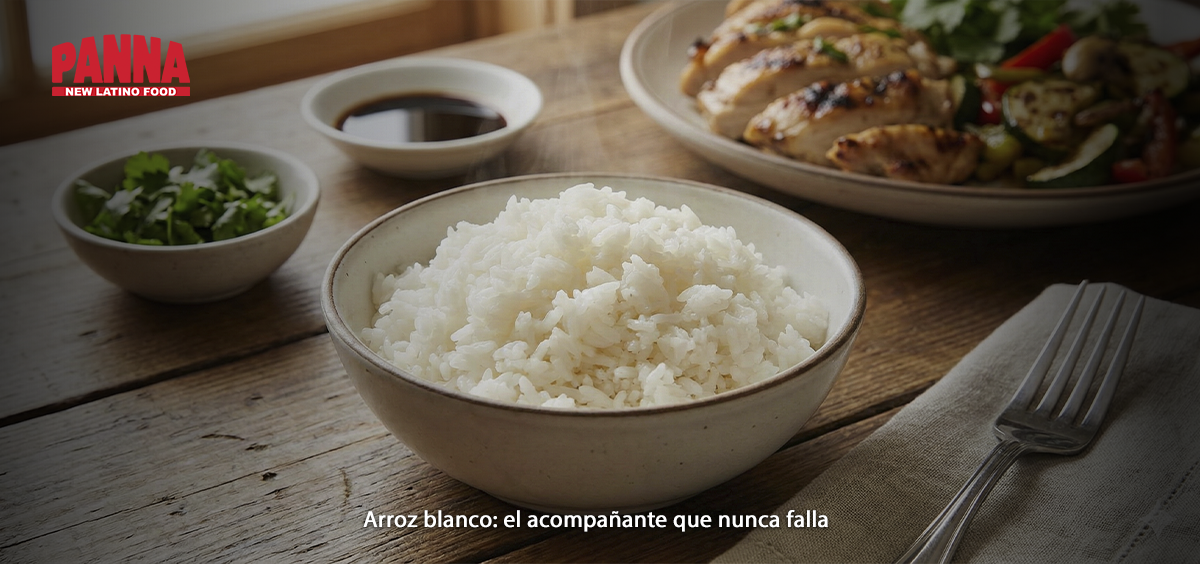
Venezuelan rice is served loose, grain by grain, without clumping. That detail, which seems minor, is fundamental. Mushy or overly wet rice breaks the balance of the dish. That’s why, in many homes, achieving the perfect point is considered almost a test of domestic skill, because well-made white rice is a sign of care, attention to detail, and respect for daily food.
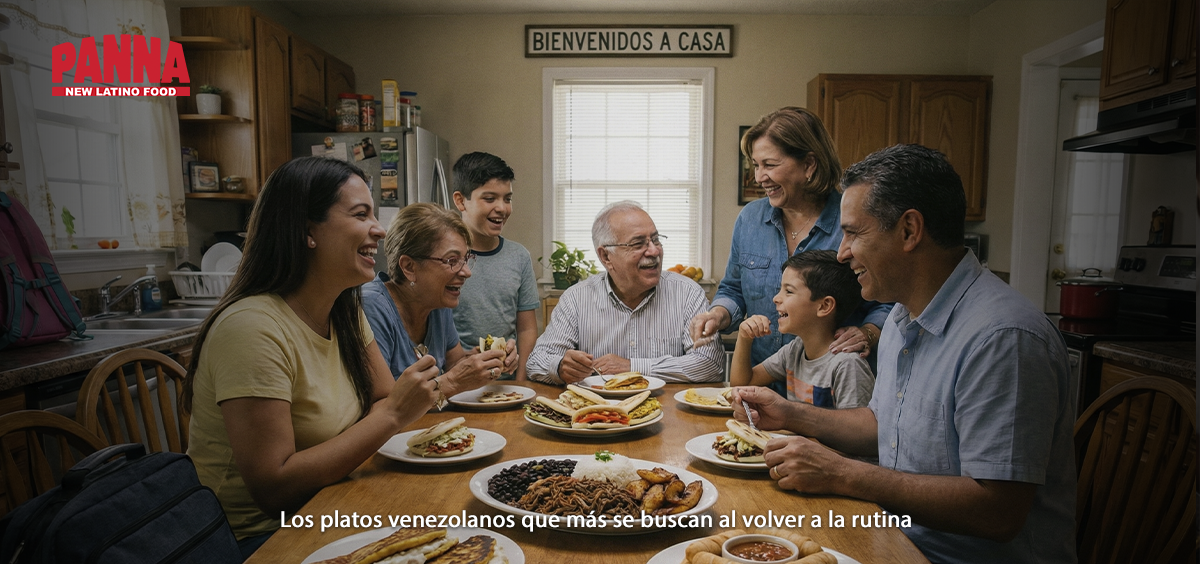
PABELLÓN, STEWS, AND SIDES The clearest example of white rice’s role is the pabellón criollo. Rice, black beans, shredded beef, and sweet plantains work as a system where each element serves a specific purpose. The rice absorbs the flavor of the stew, balances the sweetness of the plantains, and interacts with the texture of the beans. It isn’t a filler; it’s a mediator.
Beyond pabellón, rice accompanies chicken stews, meats in sauce, fried fish, and even eggs. For many simple lunches, rice, black beans, and an egg are enough to solve the meal. That combination, as common as it is effective, reflects the practical logic of Venezuelan cuisine: a few ingredients, well executed, with a satisfying result.
WHITE, BUT NOT BLAND Even though it’s called white rice, its flavor isn’t entirely neutral. In many homes, it is cooked with garlic, a touch of onion, or with oil previously heated to seal the grain. These small decisions make the difference between decent rice and memorable rice. The goal isn’t to over-flavor it, but to give it a base that accompanies without distracting.
Venezuelan white rice doesn’t try to compete with the aliño or the stew. Its role is to accompany, support, and cleanse the palate between bites. That’s why, when served alongside intense dishes, it becomes an essential element for fully enjoying the meal.
RICE IN THE DAILY ROUTINE In everyday life, rice also serves a practical purpose. It is cooked in large batches and reused throughout the day. It can accompany lunch and then become a simple fried rice, rice with an egg, or the base for a quick dinner. This adaptability makes it a central ingredient in Venezuelan home cooking.
Furthermore, rice is a meeting point between generations. Many people remember mothers and grandmothers measuring water “by eye,” tasting the grain before turning off the stove, and adjusting the salt at the end. It is a technique passed down without written recipes, learned through repetition and observation. That silent transmission is part of the country’s gastronomic culture.
WHITE RICE AND VENEZUELAN FOOD TODAY In today’s context, white rice remains a benchmark for those seeking authentic Venezuelan food, even abroad. In cities like Miami, many diners immediately recognize if a dish “tastes like home” when the rice is well made. It is a sign of faithfulness to tradition and a real understanding of local cuisine.
It is no coincidence that restaurants that respect everyday Venezuelan food take special care of this side dish. Good rice speaks of technique, consistency, and respect for the whole plate. Even if it isn’t the star, it is one of the best indicators of quality.
AT PANNA, BALANCE STARTS WITH THE RICE At PANNA, white rice is prepared with the same attention as the rest of our dishes. We aim for loose grains, clean flavor, and the right texture, because we know that’s where the balance of the dish begins. It isn’t an automatic side; it is a fundamental part of the experience.
For those looking for Venezuelan food in Miami that respects the real logic of our everyday table, white rice is a clear proof of authenticity. At PANNA, we serve it the way it has always been done: with simplicity, precision, and respect for the side dish that never fails.