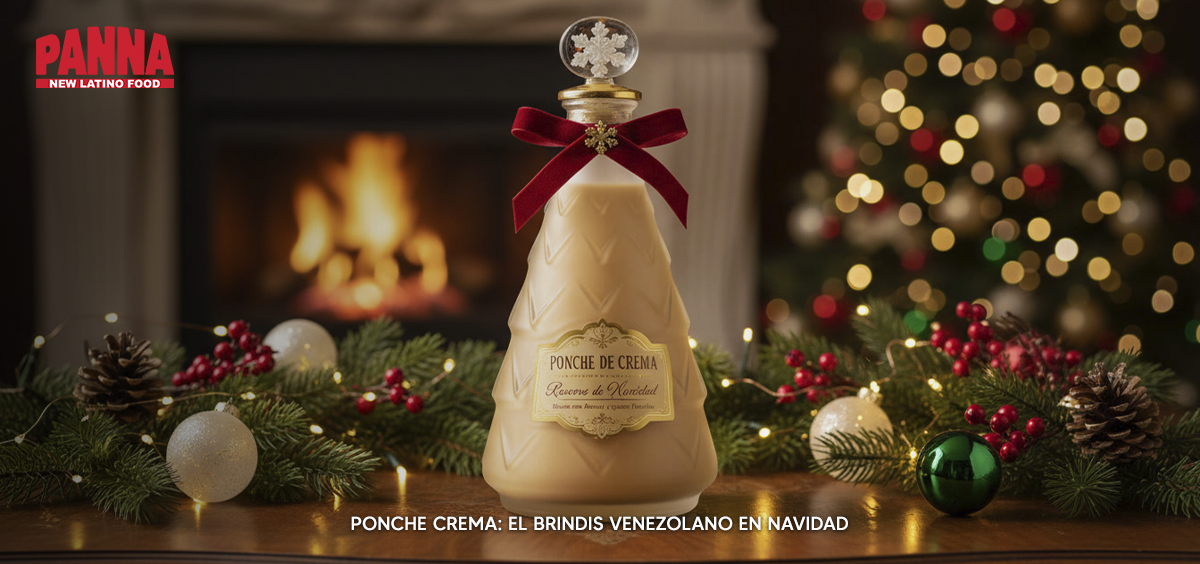
There is no Venezuelan Christmas without a bottle of ponche crema waiting its turn at the table. That golden color, its creamy texture, and its aroma of mild liquor and vanilla are part of December’s sensory landscape. In the fridge or on the table, ponche crema appears at every gathering like an old friend returning each year, bringing with it the promise of a shared toast.
Its flavor brings back memories: family after-dinner conversations (sobremesas), laughs after dinner, the cold glass passed from hand to hand while gaitas play in the background. More than a drink, ponche crema is a gesture; a symbol of the affection offered and the flavor that unites.
AN INVENTION WITH A VENEZUELAN SIGNATURE
Although many associate it with English eggnog or Mexican rompope, ponche crema has its own distinct identity. It was created at the end of the 19th century by Caracas native Eliodoro González Poleo, a chemist and pharmacist passionate about experimentation. His original recipe—a precise combination of eggs, milk, sugar, rum, and vanilla—quickly became a commercial success under the brand “Ponche Crema González.”
The drink wasn’t just loved for its flavor, but for its silky texture and its ability to remain stable at room temperature, a technical achievement for the time. From then on, ponche crema became a classic at the Venezuelan table. Its sweet and slightly alcoholic flavor won over generations, and its versatility made it a must-have in both humble homes and formal dinners. Over time, homemade variations emerged, each with a personal touch: more vanilla, more liquor, less sugar, a bit of lemon zest, or even cinnamon. But the essence remains the same: a drink that combines simplicity, warmth, and balance.
THE CHEMISTRY OF FLAVOR
The secret to ponche crema lies in its structure. The mix of egg yolks and milk creates a thick base that, when cooked slowly with sugar, reaches the perfect creamy consistency. Rum—preferably aged—acts as a natural preservative and provides that unmistakable aroma that sets the criollo punch apart from foreign versions. Then, vanilla and spices round out the flavor, giving it depth without overshadowing the sweetness.
Preparing it requires patience and precision. If the heat is too high, the mixture separates; if it cools too fast, it loses its body. That’s why traditional recipes insist on stirring constantly and letting it cool little by little before bottling. Anyone who has made ponche crema at home knows the process is almost meditative: stirring calmly, tasting from the spoon, adjusting the amount of liquor, and enjoying the smell that fills the kitchen.
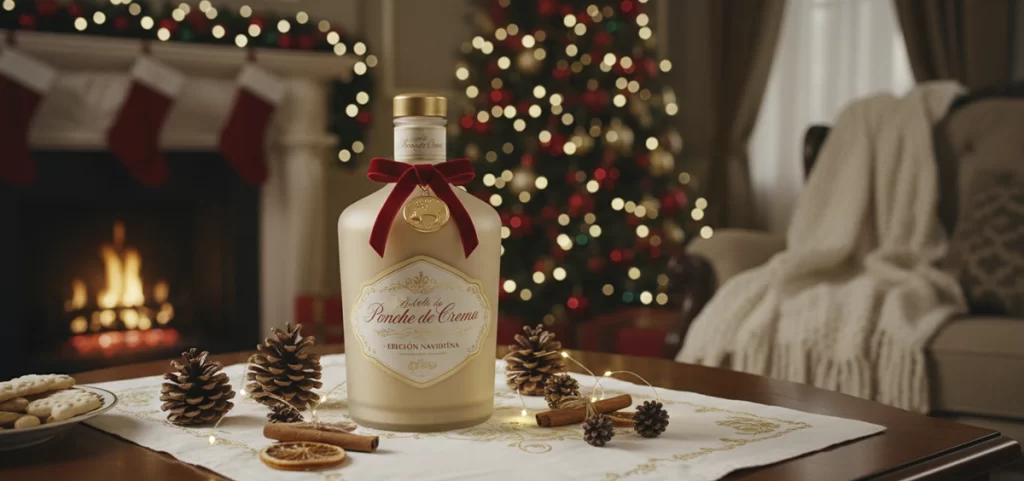
PONCHE CREMA AS A FAMILY RITUAL
Every December, in Venezuelan homes, someone takes on the role of “master ponchero.” That person prepares the punch with the same devotion that others put into making hallacas or pan de jamón. The liquor is tasted, the bottle is labeled with a marker, it’s kept in the fridge, and there is always one to give away. Because ponche crema is also that: a symbolic gift that says, “Here is a piece of my Christmas.”
The moment of the toast is almost always the same. The table still has remnants of hallacas, the pan de jamón is half-cut, and someone hands out small glasses. The first sip is a liquid hug, soft and warm. It mixes the memories of the ending year with the excitement of what’s to come. That’s why ponche crema never goes out of style: because it doesn’t belong to a season, but to a feeling.
EVOLUTION AND NEW VERSIONS
Today, ponche crema is experiencing a new wave of popularity. Many Venezuelans inside and outside the country have rediscovered the homemade recipe, adapting it with local ingredients or alcohol-free versions. In Miami, for example, some bakeries and restaurants offer it artisanally, made from scratch and bottled in small batches. Reinterpretations with chocolate, coffee, or coconut have even emerged, without any of them eclipsing the original formula.
However, there is something that doesn’t change: the way ponche crema accompanies conversation and marks the end of the Christmas dinner. It is the drink served with confidence, without ceremony, and that tastes familiar to everyone. Its success lies in its balance: sweet enough for dessert, strong enough for a toast, and so welcoming that there is always someone asking for “just a little bit more.”