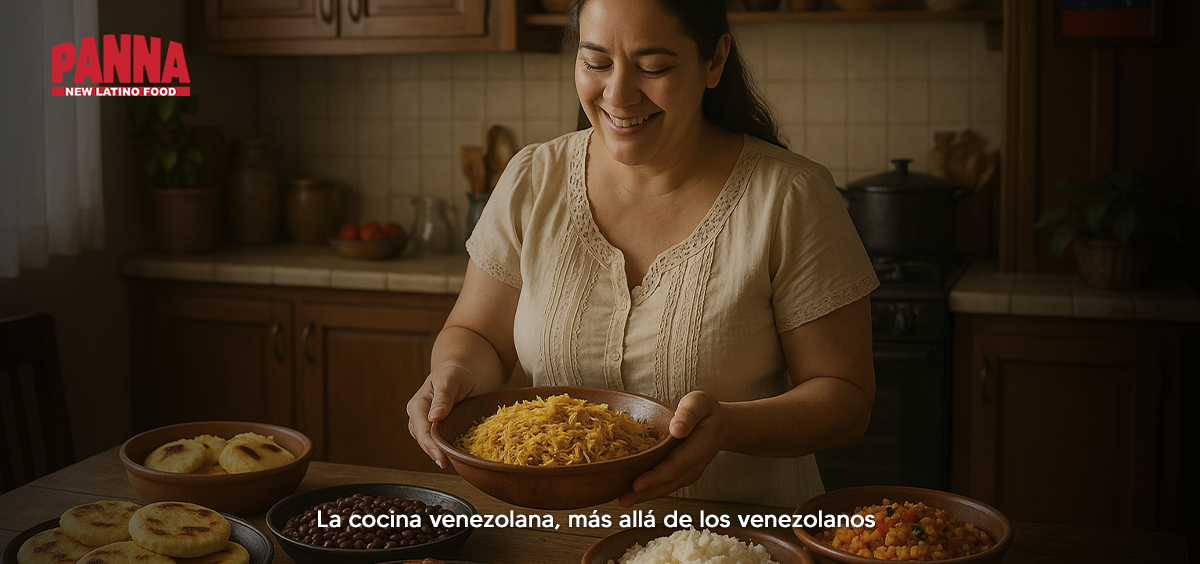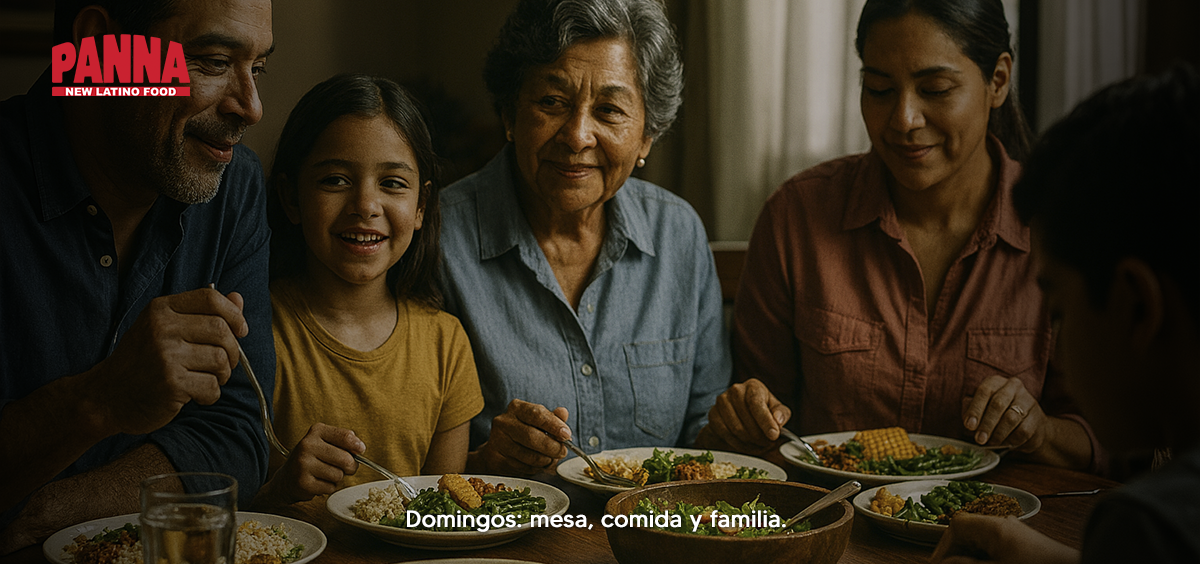
In Venezuela, Sunday has its own aroma. While the city yawns and the sun clears the mist, a kitchen fires up early and sets the pace for the day with sounds we already know: the pot simmering softly, the knife chopping on a wooden board, the budare (griddle) heating up without a rush. This is how the big day of the week begins—the one that gathers the family, organizes nostalgia, and restores a sense of belonging. No formal invitation is needed; custom calls on its own. That is why, when the time comes, the Sunday table becomes the center of the home—the place where everything is discussed, settled, and celebrated over a shared bite.
The scene follows a script learned through years of affectionate repetition. Someone tastes the sofrito, someone else slices tajadas (sweet plantains) with the precision of one who learned by watching, another washes the rice until the water runs clear, and an aunt stirs the black beans with the patience that a low flame demands. Meanwhile, the rhythm of the house settles in; stories we already know are retold, inside jokes emerge, and a comfortable silence opens up space for memory. That is why Sunday, more than a day, is an attitude: the act of slowing down to remember that life is best enjoyed around a steaming plate.
A MEMORY SERVED ON A DINNER PLATE
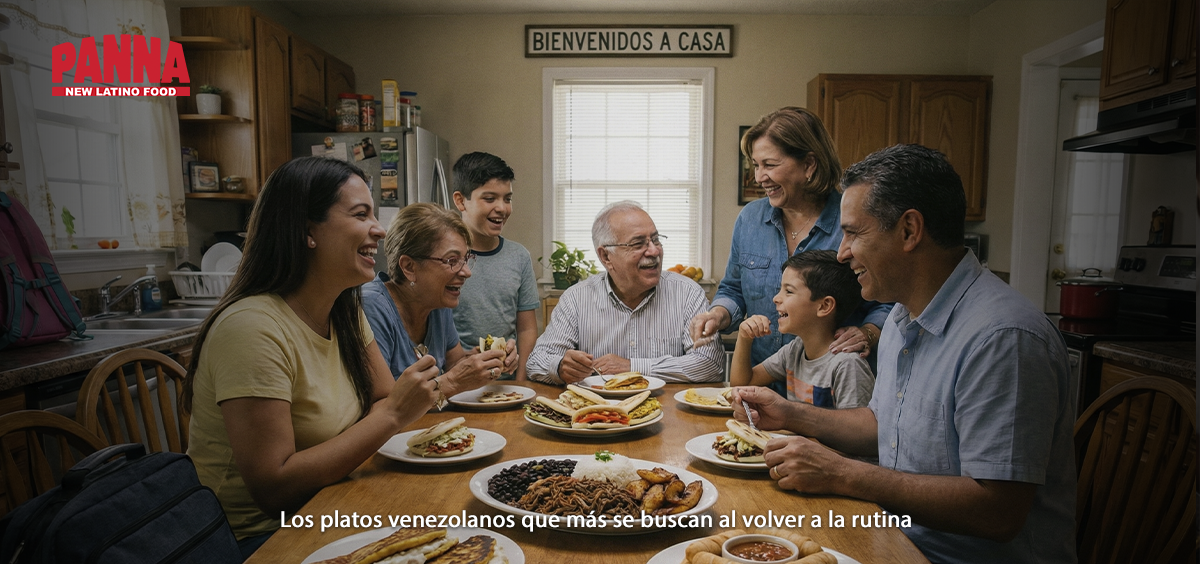
The Sunday table doesn’t need a show; it is sustained by the essentials. In many homes, pabellón criollo reigns with quiet authority: fluffy white rice, creamy black beans, shredded beef that took on color in the sofrito, and golden tajadas that balance the meal with their exact sweetness. In others, the asado negro (eye of round roast) rules, sliced generously and leaving a dark sauce that begs for bread or an arepa to soak up every last drop. There is also room for cornmeal polenta pies inherited from creative grandmothers, Venezuelan-style pastichos (lasagna) that mix tradition with cravings, or sancochos (hearty stews) that traveled to the table from a backyard pot.
The intention is what matters. The Venezuelan Sunday doesn’t seek sophistication; it seeks balance, flavor, and reasonable abundance. That is why the table, even when simple, looks complete. There is a silent order: the main dish in the center, the sides surrounding it, the pitcher of papelón con limón (sugarcane limeade) condensing the tropics into a glass, and the arepas waiting their turn under a cloth to arrive hot at the exact moment. In this family protocol without a written manual, every gesture has meaning, and every dish tells a piece of the home’s story.
THE RHYTHM OF THE KITCHEN AND THE LANGUAGE OF SCENTS
Before seeing the dishes, you know how the day is going by the smell. If the house smells of ají dulce (sweet pepper) and cumin, there is likely beef stewing on low heat; if the air carries notes of cilantro and scallions, a broth is reaching its peak; if the smell of melting sugarcane dominates, the papelón con limón is about to hit the table. This is how we converse on Sundays: with aromas that announce timing and sounds that tune expectations. A constant simmer says the beans are finding their flavor; the soft sizzle of oil reveals tajadas halfway to golden; the unhurried budare guarantees arepas that puff up without anxiety. It is a sensory language we learned without realizing it—one that confirms, without fancy words, that we are home.
The Sunday kitchen also teaches how to measure. There are no exact spoons, only hands with experience; there are no stopwatches, only patience and a trained ear. The salt is tested, the thickness is corrected, and stews are left to rest so the flavor can mature. Everything is reheated with a quick spark just before serving, so nothing reaches the plate “tired.” The table appreciates those small decisions that, combined, make a lunch great.
A TRADITION THAT EDUCATES THE PALATE AND THE CHARACTER
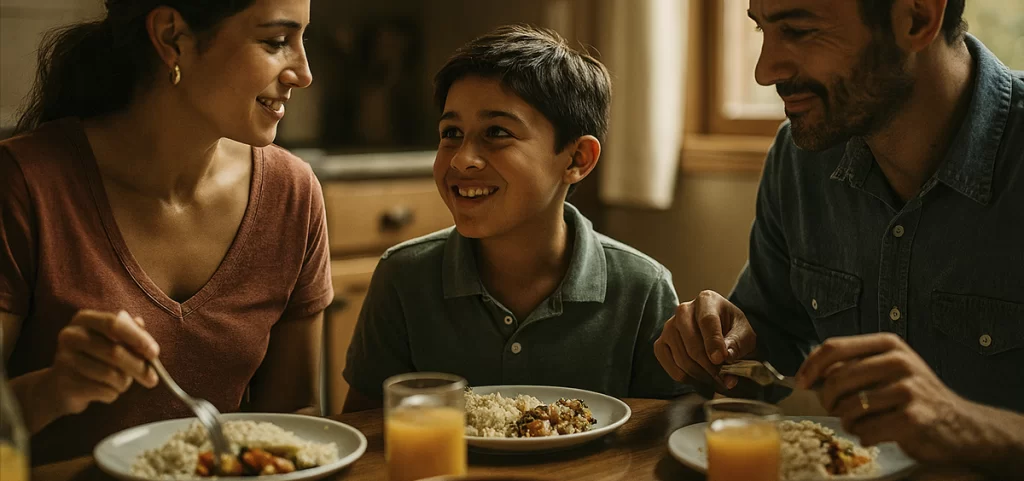
The Venezuelan Sunday doesn’t just feed; it shapes us. In that weekly repetition, we learn to set the table, to share portions fairly, to wait our turn to be served, to thank the one who cooked, and to clear the table together when the tablecloth holds crumbs and laughter. That is why Sunday lunch endures as a school of belonging; it teaches us to coexist, to respect the recipe, and to enjoy unhurried conversation. It is also how the palate is educated, with dishes that follow a sequence: the salty balancing the sweet, the creamy embracing the crunchy, the citrus waking you up, and the coffee closing the meal with a sense of ritual.
In this domestic school, knowledge that doesn’t fit in books is passed down. A grandmother whispers secrets, and the youngest in the house listens with unexpected seriousness. The story of why this family’s beans need a touch of sugar is preserved; the thesis that rice should not be stirred once it has boiled is defended; it is explained that a tajada is pulled when its edges are golden but its heart is still soft. These are small certainties that build identity and anchor a family’s memory to a flavor.
FROM THE HOMELAND TO THE DIASPORA: THE TABLE AS AN ANCHOR
When life took us to other countries, the Venezuelan Sunday became a compass. In Miami, where the week runs at a different pace and the weather imposes its own agenda, Sunday lunch reclaims its original function: to organize nostalgia, recalibrate the week, and reunite those who are scattered. Finding ingredients is no longer a feat, and if something is missing, the Venezuelan hand adjusts without betraying the essence. Thus, a pabellón prepared with calm, an asado that perfumes the entire apartment, or a sancocho that gathers everyone in the afternoon, does the quiet work of bringing us home for a while.
Sunday in the diaspora also documents recent history. At many tables, generations that hadn’t lunched together in years finally meet—children who grew up with new accents and grandparents who found nicknames for the country so it wouldn’t hurt to name it. To eat is to tell a story, and Sunday offers a safe territory for those conversations that don’t fit into the weekly rush. Therefore, the Venezuelan lunch is not a whim; it is an emotional anchor—proof that identity resists when it is practiced.
THE SOBREMESA: THAT ART OF OURS
If lunch is the main act, the sobremesa (the after-lunch talk) is its perfect epilogue. The coffee arrives—black or with milk—and a quesillo (flan) that someone brought with pride appears, or a slice of homemade cake that scents the late afternoon with vanilla. Voices lower and affection rises; the missing anecdote is told, and the clock is ignored. The Venezuelan sobremesa has its own time and a talent for suspending urgency. No one rushes the last person dipping an arepa into the beans; no one complains if a single tajada is left to finish off a memory. That Sunday elasticity is part of the charm—a silent agreement to hold the moment as long as necessary.
THE SUNDAY WE SERVE AT PANNA
At PANNA, we believe in that Venezuelan way of understanding the table. We cook with the respect that home recipes deserve and the rhythm that a well-made Sunday requires. Our black beans are prepared with a patient sofrito; our meat is shredded with care until it takes on the color and aroma that memory recognizes; our rice arrives fluffy and white as it should; and our tajadas are fried to that golden brown that cheers the eyes before the first bite. When the time comes, a roast with its glossy sauce or a fragrant broth fulfills the promise of nourishing without heaviness and reconciling the spirit in a single spoonful.
If you are in Miami and you miss that Sunday that puts the week in order—if you want to sit down without a rush at a table that sounds familiar and tastes like home—come to PANNA. Here, lunch is served with the same cadence as always, the sobremesa is respected, and the Venezuelan flavor arrives in full—with its memory, its emotion, and its belonging. Because a Venezuelan Sunday, when done right, isn’t explained—it is lived with a spoon, a knife, and a smile.