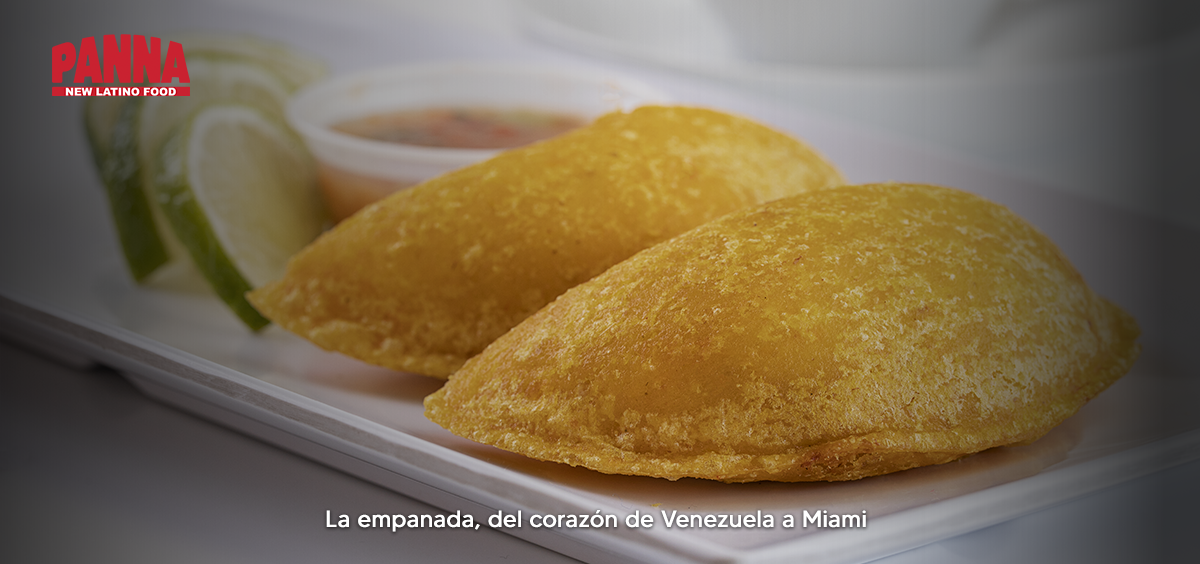
There are aromas that are never forgotten, sounds that are enough to bring back an entire era, and flavors that summarize the whole life of a country. The Venezuelan empanada belongs to that category of collective memories: it is breakfast, a snack, a roadside lifesaver, an excuse for a conversation, and a source of pride.
Crunchy on the outside, soft on the inside, full of history and ingenuity, the empanada has been for generations the best ambassador of our local flavor. And in Miami, where accents cross paths and nostalgias recognize each other, it has found a second home without losing its identity.
To speak of empanadas in Venezuela is to speak of routine and affection, because there is no beach without its makeshift stand, its steaming griddle, or that little piece of paper stained with oil and happiness. Neither is there a city without that breakfast corner where the empanada arrives freshly fried, its filling still steaming, and that scent that wakes up even the deepest sleeper. From the Caribbean shore to the avenues of Caracas, the empanada has accompanied daily life as a small, accessible luxury—a treat that needs no special occasion.
AN ORIGIN MADE OF CORN AND CUSTOM
Although its name and shape may remind some of other Latin American empanadas, the Venezuelan one has an unmistakable personality. The dough, made with pre-cooked cornmeal, is the secret to its golden texture and that taste that speaks of the budare (griddle), the market, and tradition.
This simple yet noble base allows for an infinity of fillings that reflect the country’s diversity: cazón (baby shark) in the East, telita cheese in the Plains (Llanos), shredded beef in the Center, pabellón in the cities, and even the “light” version, the dominó (black beans and cheese). Every region, every family, and every stand has its touch—its own pinch of salt, kneading technique, type of oil, and frying style. Although a thousand versions exist, they all share one truth: a well-made empanada is a promise kept.
In coastal towns, empanadas are fried at dawn, their aroma mixing with black coffee and the sound of the sea—a scene repeated with the beauty of a tradition that needs no reinventing. In the interior, the empanada is synonymous with a roadside breakfast, a mandatory stop before continuing a journey, a short but warm conversation between the server and the diner. Thus, between sea and mountain, between the stove and the city, the empanada became part of the Venezuelan identity: as everyday as a greeting, as necessary as our daily brea
A FILLING FOR EVERY STORY
Behind every filling, there is a story. The cazón empanada tells of the lives of fishermen who learned to preserve the stew with ají dulce (sweet pepper) and onion for the morning sales. The fresh cheese filling speaks of the abundance of the Plains, of cows milked at sunrise, and the local love for salty flavors. The shredded beef version celebrates the ingenuity of cooks who transform the simple into the savory with just a well-made sofrito. And the pabellón—the most modern of all—unites everything: beans, rice, meat, and tajadas (sweet plantains) in a single bite that summarizes the entire country.
The empanada also has an emotional dimension. It’s the one eaten at the beach after a swim, when hunger strikes and the sun is unforgiving; it’s the one shared at gatherings, baptisms, local fairs, or during the early hours of December mornings. It is, in essence, an expression of affection. Because whoever fries empanadas for another, without rushing, is giving something more than food: they are offering time, care, and closeness.
THE EMPANADA IN THE DIASPORA: BETWEEN NOSTALGIA AND PRIDE
When Venezuelans began to fill the world’s cities with their accent and energy, the empanada was among the first things to be packed. It traveled in memory, in hands, and in cravings. In Miami, it transformed into a meeting point: a flavor that unites those who arrive and comforts those who are already here.
In many homes, the tradition remains alive; weekends smell of freshly kneaded corn dough, melting cheese, and hot oil announcing breakfast. In Venezuelan coffee shops, the empanada is no longer presented as just “typical food,” but as a natural part of the city’s gastronomic landscape. Its popularity is no surprise. The empanada has something universal: the warmth of the filling, the crunchy texture, and the honest flavor that wins people over without a speech. In a city where so many cultures mix, the Venezuelan empanada has earned its place, not as a guest, but as a host. In fact, at many tables, it has become the gateway for those who want to discover the flavors of Venezuela.
THE TASTE OF HOME AT PANNA
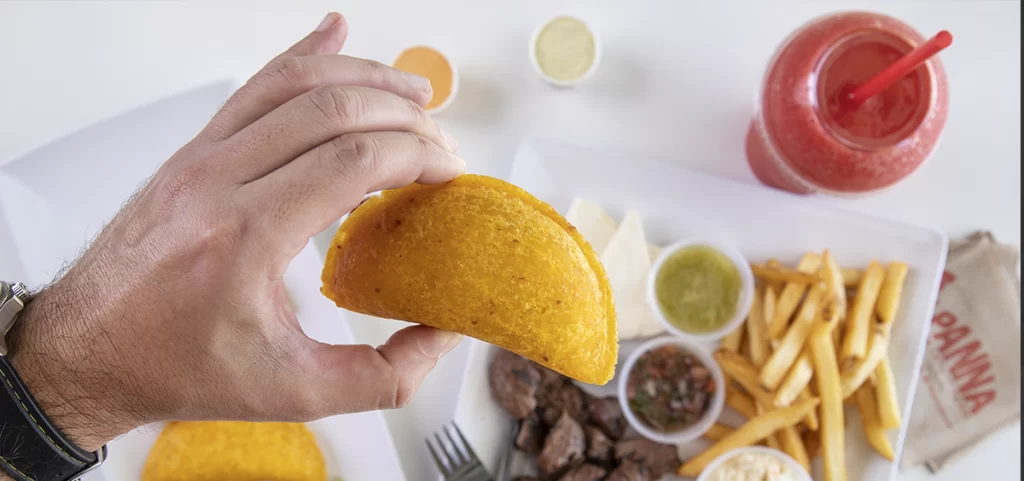
At PANNA, the empanada is not just a menu item: it is part of the story we tell every day. We prepare them with fresh corn dough, generous fillings, and the exact frying point to ensure they are golden, crunchy, and never greasy. We serve them freshly made, just like at the beach, and with the same respect for tradition we learned at home.
We have cheese, shredded beef, pabellón, and chicken empanadas, but they all share one intention: to preserve the authentic flavor that memory recognizes at the very first bite. In Miami, where nostalgia often arrives disguised as a craving, a PANNA empanada has the power to return the diner to a familiar place. Every bite is a reunion with childhood, vacations, and the shared table. There are foods that aren’t just enjoyed—they are felt. Thus, between the sound of the oil, the smell of the corn, and that first hot bite, the Venezuelan empanada continues to fulfill its noblest mission: making us feel at home, no matter how far away we are.