Venezuelan Chocolate: A Scent That Resists Time
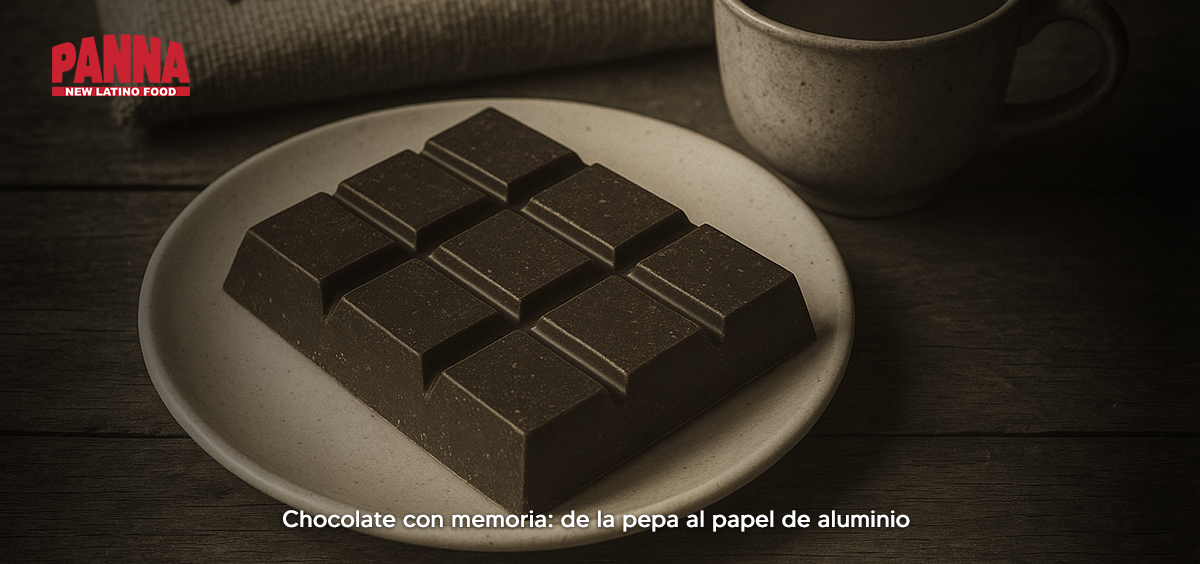
They say that when a country loses its sense of smell, it loses its memory. In Venezuela, one of those aromas that resists the passage of time, changes, and miles is that of chocolate. Few things are as evocative as a chocolate bar opened by hand—that slight crinkle of the foil and the sweet rush that immediately fills the air.
But behind that sensory moment lie centuries of history, identity, artisanal work, and a relationship that goes far beyond taste. Venezuelan chocolate has not only been recognized worldwide for its quality; it has also been a witness to history—a living memory of families, landscapes, and cultural heritages that can still be felt in every bite today.
A STORY BORN FROM THE EARTH
Since pre-Hispanic times, Venezuelan cacao has been part of the country’s agricultural heart. Long before the arrival of colonizers, indigenous peoples were already cultivating and processing cacao as food, medicine, and a sacred offering.
The first criollo varieties of Venezuelan cacao, such as Porcelana and Chuao, are globally recognized today for their delicate flavor, low acidity, and floral and fruity notes. It is no wonder that chefs and chocolatiers from all over the planet seek it out as a luxury ingredient.
During the colonial period, cacao became one of Venezuela’s primary export products. It was grown in the fertile lands of Barlovento, on the coasts of Aragua, and in the valleys of Caracas, generating wealth but also stories marked by slavery and cultural blending. Cacao was “gold in a bean,” and its flavor was a footprint passed down from generation to generation.
CACAO AND CHOCOLATE: THEY ARE NOT THE SAME
It is worth clarifying: cacao and chocolate are not synonyms. Cacao is the fruit, the seed, the raw material. Chocolate, on the other hand, is the result of a complex process that transforms the seed into a bar, cream, drink, or truffle.
For cacao to become chocolate, it must be harvested, fermented, dried, roasted, and ground. Only then does it release its deep flavors and characteristic notes. In Venezuela, artisanal chocolate is experiencing a renaissance. Small producers have returned to traditional processes with modern techniques, prioritizing quality over quantity. This has led to award-winning brands, gourmet bars, and, above all, an emotional reconnection with a product that is part of our DNA.
THE TASTE OF CHILDHOOD, CELEBRATION, AND HOME
It doesn’t take much imagination for a Venezuelan to remember their childhood through the taste of chocolate:
- A steaming mug during a visit to Mérida or El Junquito.
- A “ball” of chocolate wrapped in metallic paper right after finishing homework.
- A homemade birthday cake, whether from a box or with generous layers of ganache.
- An ice cream in the plaza, a final square eaten in a hurry, or a gift box at Christmas.
Chocolate has accompanied us in celebrations, reunions, moments of comfort, and even in distance. Many Venezuelan migrants say that one of their greatest longings is to taste again that chocolate they grew up with—with that sweetness that isn’t cloying and an aroma that smells like home.
THE MASTERS OF FLAVOR: FROM BEAN TO TRUFFLE
Over the years, the craft of the chocolatier has been cultivated in families, towns, and communities that have known how to preserve almost secret techniques:
- Natural fermentation under plantain leaves.
- Sun-drying, turn by turn.
- Roasting in artisanal drums to enhance the aromas.
- Slow grinding with stones or stainless steel mills.
This know-how is passed down with phrases like “the bean tells you when it’s ready,” “don’t over-roast it or it will turn bitter,” or “taste it before it cools.” Today, the boom of Venezuelan artisanal chocolate brands has revitalized this art, taking national chocolate to international showcases and restoring pride to those who produce, transform, and offer it as a gift of identity.
CHOCOLATE IN POPULAR CULTURE: MORE THAN A SWEET
Chocolate isn’t just in the kitchen. It’s in songs, stories, proverbs, and even everyday speech. Who hasn’t said that chocolate is as pleasurable as love? Or used words like chocolatico or bomboncito as synonyms for affection?
It has held a symbolic place in our celebrations, in school culture, in neighborhood kiosks, at the bakery counter, and in love stories that begin with a box of chocolates. Because yes, chocolate doesn’t just nourish… it communicates. It is a gesture, a language, a symbol—a promise of sweetness, tenderness, and enjoyment.

AT PANNA, WE SERVE IT WITH EMOTION
At PANNA, chocolate is an essential part of our universe. Not just for the flavor, but for what it represents. That is why we use it especially in our hot and cold drinks that accompany breakfasts and snacks, and in special editions that celebrate our roots.
We select it with care, work it with love, and serve it with pride. We know that for many of our customers, that first sip of hot chocolate is much more than a drink. It is a journey through time. A return to the homeland. A liquid hug that comforts and moves the soul.
FROM THE BEAN TO THE FOIL
Every bar of Venezuelan chocolate tells a story. From the bean that sprouts from the fruit to the wrapper opened by hand, there is a narrative thread that unites country and city, childhood and adulthood, past and present.
Even though people today talk about cacao percentages, sensory notes, textures, and pairings, the truth is that chocolate remains, above all, an emotional experience. It reminds us of who we are, where we come from, and what we want to preserve.