Hallacas Out of Season: There are flavors that activate an internal calendar. As soon as December arrives, our sense of smell fills with onoto, stew, and plantain leaves. But what if you find a hallaca in the middle of April? Is it a sacrilege or a blessing?
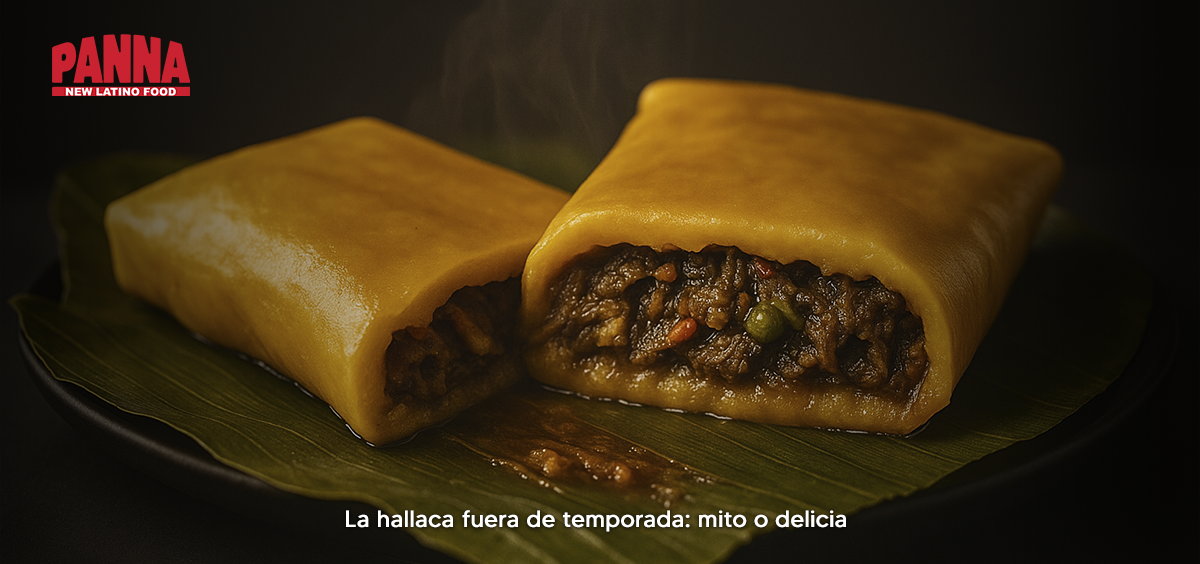
The hallaca, our national dish par excellence, is much more than a Christmas recipe. It is “wrapped memory”—a cuisine that unites generations and regions. However, today many wonder if it makes sense to reserve it only for December. Why not enjoy it at any time of the year? In times of migration, nostalgia, and culinary reinterpretation, the question is no longer if it can be done, but why it hasn’t been done before. And perhaps, like so many other customs, this one is also changing.
THE HALLACAS: A HERITAGE OF INDIGENOUS, EUROPEAN, AND AFRICAN ROOTS
Few dishes illustrate cultural blending (mestizaje) as clearly as the hallaca. Its origin dates back to the colonial era, when the kitchens of the elite were filled with festive preparations at the end of the year. The cooks—often enslaved people or indigenous servants—prepared a sort of tamale wrapped in plantain leaves using leftovers from the banquet.
Over time, the dish evolved into a sophisticated preparation that brings together ingredients and techniques from three cultures:
- Indigenous: The corn dough and the plantain leaf.
- European: The stew cooked with meats, olives, capers, wine, almonds, and raisins.
- African: The spices, the sweet touches, and methods such as slow cooking or smoking. The result was a unique preparation that could only be achieved with patience, family organization, and a good dose of love.
Hallacas Out of Season: THE DECEMBER FAMILY RITUAL
Unlike everyday dishes, the hallaca involves a culinary choreography:
- The leaves are cleaned.
- The dough is colored with onoto (annatto) oil.
- The stew is cooked (sometimes separately for each type of meat).
- The garnishes are prepared: onion rings, bell peppers, olives, raisins, and capers.
- It is tied with pabilo (cotton string).
- It is boiled in large pots for over an hour.
Every home has its version and its own sacred day to make them. In many families, making hallacas marks the official start of Christmas. It’s not just cooking; it’s remembering, laughing, and sharing anecdotes. It is—literally—wrapping oneself in family history.
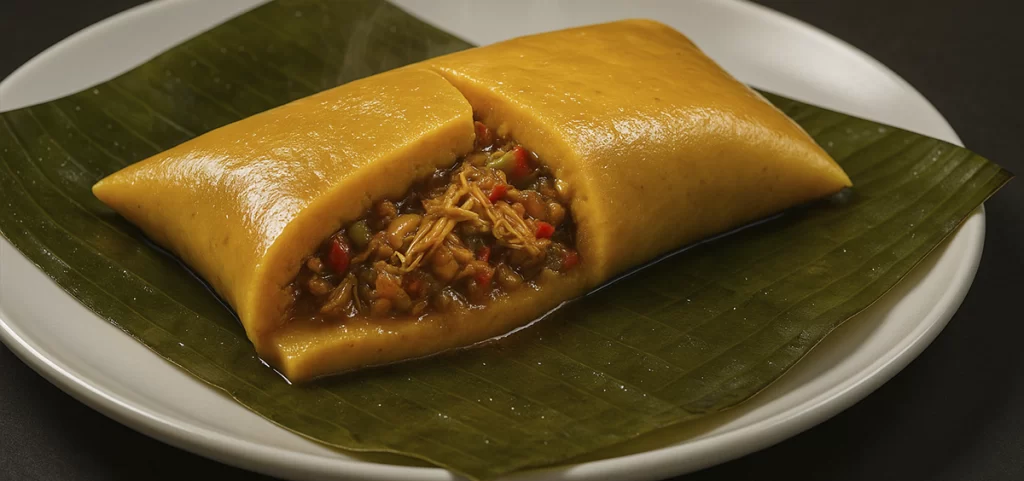
Hallacas Out of Season: REGIONAL VARIATIONS: A HALLACA FOR EVERY TASTE
While the base structure remains, each region has developed its own style:
- Caraqueña (Central Region): Pre-cooked stew, a mix of meats (beef, pork, chicken), red wine, papelón, and ají dulce. Very aromatic with aligned garnishes.
- Andina (Andes): Raw stew that cooks during the boiling process. Includes chickpeas, prunes, and almonds. Sometimes rice is added, and the dough is firmer.
- Oriental (East): Incorporates ingredients like hard-boiled eggs, sliced potatoes, and chickpeas. In coastal areas, dried fish or even seafood is used.
- Zuliana (Zulia): Firmer, sometimes with grated plantain mixed into the dough. It’s served with chicken salad and pan de jamón and tends to have intense, spicy flavors.
- Llanera (Plains): May incorporate game meat depending on the area. Spicy peppers and grated white cheese are added. It is very aromatic and hearty.
These regional versions prove there isn’t just one hallaca. There are many, all valid, all delicious, and all symbols of belonging.
THE DIASPORA AND THE YEAR-ROUND HALLACA
Since the Venezuelan migration multiplied, the hallaca began to emerge outside of December. Why? Because those who are far away cook with their hearts, and cravings don’t wait for the calendar to hit the right month. In cities like Madrid, Bogotá, Buenos Aires, or Miami, you can find hallacas in April, July, or October. Some restaurants have them year-round. Others offer them for special dates like birthdays or weddings. Gastronomic ventures have seen an opportunity here: frozen hallacas, made-to-order, or in combos with pan de jamón and chicken salad. The Christmas spirit adapts to the migrant’s new life.
TRADITION BREAKER OR REINVENTION?
This is the point that divides opinions the most:
- “It doesn’t taste the same if it’s not December.”
- “Without gaitas and pan de jamón, it’s just not the same.”
- “If I make them at another time, I feel like I’m breaking a rule.”
But also:
- “My mom sent me hallacas in April and I cried.”
- “In my house in Bogotá, we make them every time it’s my dad’s birthday.”
- “It’s the dish that connects me to my country. I need it all year round.”
Panettone in Italy, Pan de Muerto in Mexico, and Turrón in Spain have already broken their seasonal barriers. Why can’t the hallaca do it too?
THE FLAVOR OF IDENTITY
The hallaca is not just a dish; it’s a cultural expression. A poem of flavors. A geography of ingredients. It lives in the gustatory memory of every Venezuelan, no matter where they are. It connects us with our grandmothers, our homes, our childhoods, and those long December days. It tells us who we are and where we come from. And if that flavor can be repeated at another time of the year, why not do it?
AT PANNA, THE HALLACA HAS NO CALENDAR
At PANNA, the hallaca is part of our identity. We prepare it exactly as tradition dictates: slow-cooked stew, onoto-stained dough, hand-placed garnishes, and carefully wrapped. During December, it is the star of the menu. But out of season, we also listen to our customers.
AND NOW WE ASK YOU
We want to know what you think. Should the hallaca remain exclusive to Christmas? Or do you believe, like we do, that it’s worth having it available all year round?
Leave us a comment on social media or stop by our location and tell us your story. Because traditions change… but the flavor that unites us remains.